
Construction cost estimating is the process of forecasting what a building will cost before and during design, and it is the foundation every budget, loan application and investment decision rests on. A number is only useful if everyone understands how much certainty sits behind it. An estimate prepared from a one-page concept and an estimate built from complete drawings can differ by 30 percent or more, and both can be perfectly honest. For owners and developers in the Okanagan, understanding that range is the difference between a project that holds its budget and one that surprises everyone at tender.
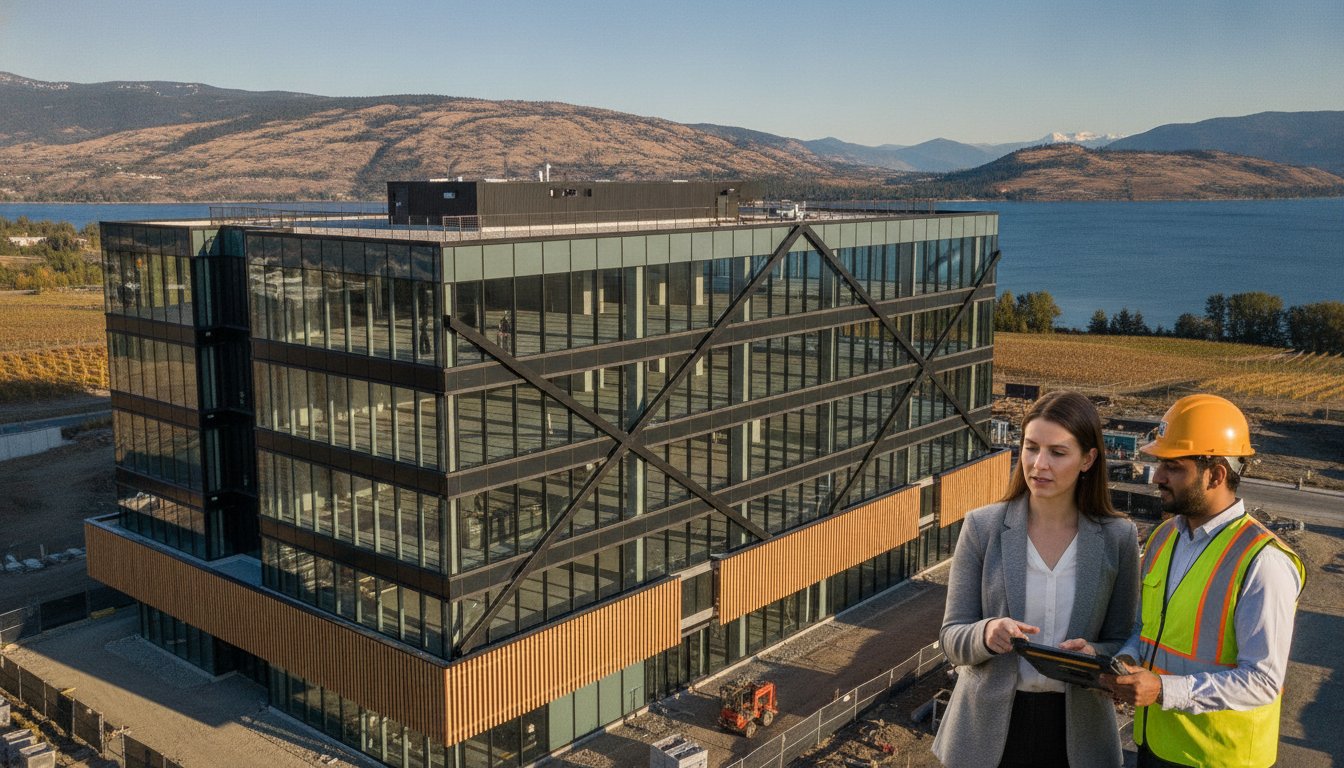
Why Estimates Change as Design Develops
Every estimate is a prediction made with the information available on that day. Early in a project the site, the structural system, the mechanical approach and the finishes are largely undecided, so the estimator relies on historical cost per square foot, recent comparable projects and allowances for what is not yet known. As the design matures, those assumptions are replaced with measured quantities and quoted prices, and the range narrows.
This is why a single early number should never be treated as a commitment. A conceptual budget of a given dollar figure per square foot is a planning tool, not a price. The honest way to present it is as a range with a clear list of assumptions, so the owner knows what is included and what has been left open.
The Common Estimate Classes and Their Accuracy
Industry practice groups estimates into classes based on how complete the design is. A conceptual or order-of-magnitude estimate, prepared with almost no drawings, may carry a plus or minus 30 percent range. A schematic estimate, prepared once the layout and basic systems are defined, typically tightens to somewhere around 15 to 20 percent. A design development estimate improves again, and an estimate prepared from complete construction documents can reach roughly 5 to 10 percent.
These percentages are guides rather than guarantees, and they depend heavily on the quality of the information supplied. A well-documented concept for a simple building can be more reliable than a rushed set of drawings for a complex one. What matters is that the class of estimate is stated openly and matched to the decision it supports, whether that is a feasibility study, a lender submission or a tender.
What Goes Into a Reliable Estimate
A credible estimate separates direct construction costs from general conditions, contingencies and fees, and it shows each clearly. Direct costs are built from quantities of concrete, framing, envelope, mechanical and electrical work, priced from current trade quotes rather than last year’s averages. General conditions cover site supervision, temporary facilities, safety and insurance. Our guide to the construction management fee explains how that portion is structured and what it does and does not cover.
Local conditions also matter. Trade availability in the Okanagan, material lead times, site access and seasonal weather all move prices in ways that a national cost database will not capture. Estimators who work in the region every day and hold current relationships with trades will price risk more accurately than those working from a distance. Escalation should be shown as its own line, so the owner can see how much is being allowed for price movement between the estimate date and the construction start.
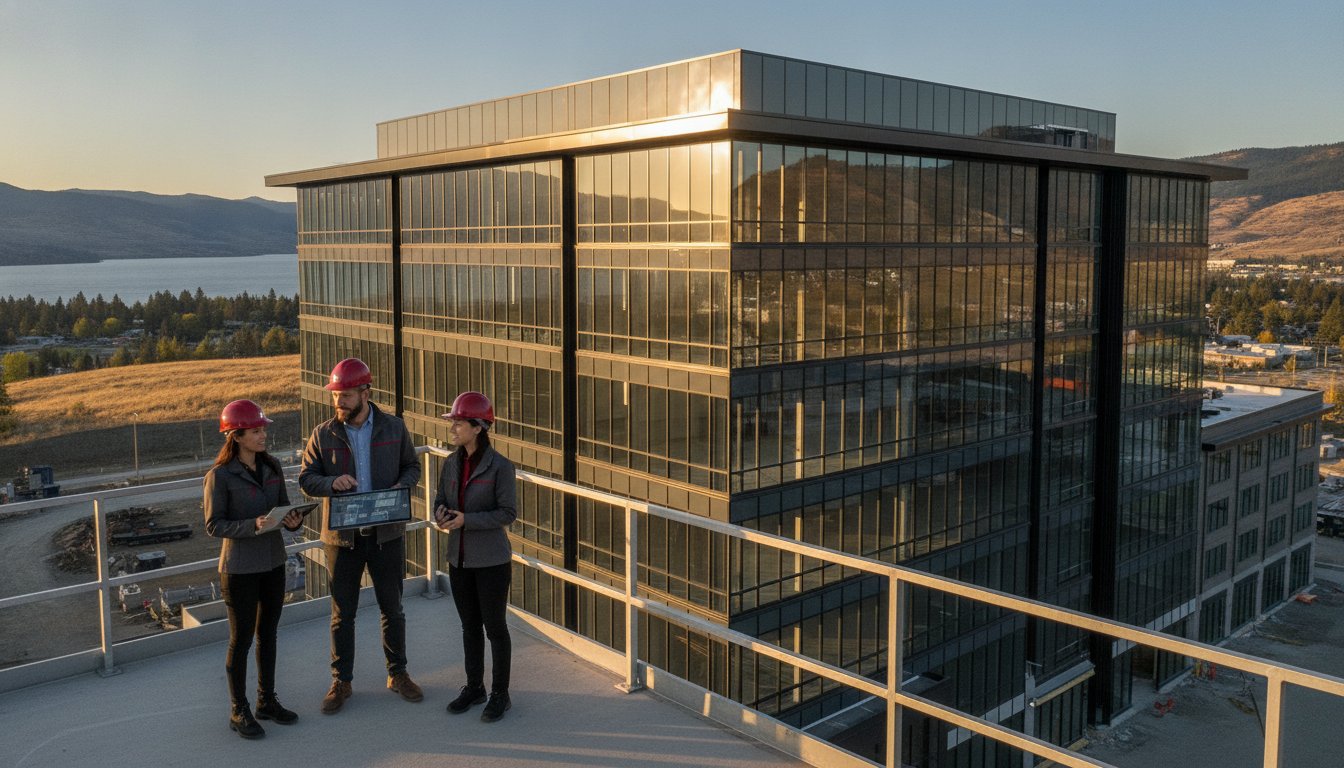
Managing Cost Certainty as the Project Moves Forward
Estimating is not a one-time event. The strongest projects update the estimate at each design milestone, compare it to the budget and flag any gap while there is still room to respond. When the numbers run high, the response is a structured conversation about scope, systems and finishes. Our article on value engineering in construction describes how those decisions can be made without sacrificing the performance of the building.
Early involvement of the construction team makes this process far more effective. Constructability advice, trade input and realistic scheduling feed directly into the estimate, which is one of the main benefits covered in our overview of preconstruction services. An owner who sees the estimate evolve from concept to tender, with every change explained, enters construction with confidence in the number rather than hope.
How Team Construction Approaches Cost Estimating
Our team has been building in the Okanagan since 1981, and we prepare estimates from current local trade pricing, clearly stated assumptions and a transparent breakdown that owners can follow line by line. We update the numbers at every design milestone so there are no surprises when it is time to build.
Contact Team Construction to talk through the budget for your next commercial or multi-family project.